

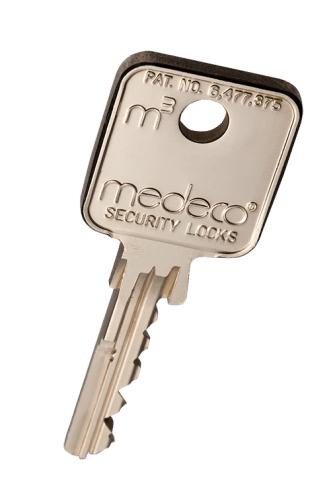
Security starts with control over who can enter your property. You hand a key to an employee, a tenant, or a service worker, and you expect to get that exact key back. But what happens if they make a secret copy at a local hardware store kiosk? Suddenly, an unknown number of people have access to your building.
That’s one reason property managers and business owners look for stronger key control. A Do Not Duplicate key (often called a DND key) has a simple message stamped directly onto the metal head. This text warns anyone holding the key that copies should not be made without proper authorization. The purpose of this approach is to keep track of who has access to your property. Key control means you know exactly how many keys exist for a lock and who holds them. When you lose control of your keys, your physical security drops significantly.
How Do Stamped Keys and Restricted Keys Differ?
Many people believe that a stamped message stops a key from being copied everywhere. This is a common misconception. To understand the true benefits of “Do Not Duplicate” keys, you must know the difference between a standard key with a stamped message and a true restricted key system.
Standard Keys with Stamped Messages
You can take a regular house key and stamp the words Do Not Duplicate onto the metal. This message acts as a psychological boundary.
- The Flaw: The key blank itself is common. Anyone can buy these blanks.
- The Risk: Many self-service key kiosks or hardware store employees ignore the stamped message. No legal rule forces a hardware clerk to refuse a standard key copy request.
True Restricted Key Systems
A restricted key system offers a much higher level of protection. These keys are built on unique hardware designs that are closely guarded by lock manufacturing companies.
- The Blanks: The metal blanks are not sold to general retail stores or automated kiosks. Only authorized locksmith companies can buy them.
- The Law: Locksmiths sign legal contracts with the manufacturers. They face severe fines and lose their license if they cut a restricted key without verifying the owner’s identity.
- The Verification: The locksmith checks an authorized signature list or an official ID card before cutting a single copy.
Stamped vs. Restricted Keys
| Feature | Standard Stamped Key | True Restricted Key |
|---|---|---|
| Visual Warning | Yes, has text stamped on it | Yes, usually has text and unique shape |
| Availability of Blanks | Available at any hardware store | Only available at authorized locksmiths |
| Kiosk Copy Protection | No, automated machines copy them easily | Yes, machines do not stock the custom blanks |
| Legal Agreements | None | Strict contracts between maker and locksmith |
| Level of Security | Basic / Low | Maximum / High |
Top Benefits of Do Not Duplicate Keys
Using restricted or properly managed DND keys brings clear advantages to commercial and residential properties. Here are the core reasons to implement this system:
- Better Tracking of Physical Copies: When you give a standard key to a worker, you have no way to verify if they made copies during their employment. If you use a restricted key system, you have greater confidence in who has access. You know that the single key you handed out is the exact same key that returns to your hand. This level of tracking eliminates the need to rekey your locks every time an employee leaves the company.
- Improving Key Duplication Security: Unapproved duplication is a major source of security breaches for apartment buildings and offices. Tenants might make a copy for a friend or family member without asking the landlord. When those tenants move away, old copies remain out in the world. A restricted key system makes unauthorized copying much more difficult. If a tenant takes a restricted key to a retail store, the clerk will not have the correct metal blank to fit inside the machine.
- Stops Key Copy Machines: Automated key-cutting booths sit in the hallways of supermarkets and home improvement stores across the country. These machines scan a key design, select a matching blank from an internal slot, and cut a duplicate within minutes. They do not read stamped text. True restricted keys use unique shapes, side grooves, and angles that these automated kiosks cannot read or replicate.
- Lower Security Costs: Changing locks is an expensive process. If an office building loses track of its keys, a locksmith must replace the inner pins of every deadbolt and handle lock, then cut brand-new keys for the entire staff. Large commercial properties often spend a significant amount on rekeying after lost keys. By investing in a restricted key system once, you protect the system from unauthorized copies, which saves massive amounts of maintenance money over time.
Legal Rules and Locksmith Industry Standards
The effectiveness of a DND key depends heavily on the professional ethics of locksmiths and specific state policies.
- Associated Locksmiths of America (ALOA) Guidelines: ALOA sets the professional code of conduct for security professionals in the United States. Their official position states that locksmiths should respect Do Not Duplicate stamps on keys, provided the key is part of a proprietary or restricted system. However, ALOA recognizes that stamping ordinary, commercial blanks does not create a legal obligation for retail stores.
- State and Local Legislation: Very few states have strict laws that punish a person for copying a standard key with a stamped message. In most regions, the stamp is viewed as an advisory request rather than a legal mandate. True legal protection only applies when patent laws protect the physical design of a restricted key blank. If a manufacturer holds an active patent on a key shape, it is illegal for any other company to create or sell matching blanks.
The Best Properties or High-Security Key Systems
While any property can benefit from tighter control, certain facilities require restricted access systems to remain safe.
- Commercial Offices and Businesses: Offices hold expensive technology, computers, and private customer documents. Owners must control access for employees, cleaning crews, and maintenance workers.
- Apartments and Multi-Family Homes: Landlords have a duty to keep their tenants safe. Preventing past residents from keeping active copies of apartment keys is a vital step in rental safety.
- Schools and Childcare Facilities: Educational institutions handle high traffic every day. Managing keys carefully prevents unauthorized visitors from entering classrooms or storage areas.
- Hospitals and Medical Laboratories: Medical facilities store controlled medications and confidential patient records. Restricting access to these zones protects inventory and satisfies privacy laws.
How to Set Up an Effective Access Management Plan
Moving your property over to a secure key structure requires an organized strategy. Follow these essential implementation steps to maximize your building protection:
- Audit Your Existing Locks: Walk through your facility and count every exterior door, interior office, and storage closet. Note which doors require maximum protection and which ones can use basic security.
- Partner with a Professional Locksmith: Contact a certified locksmith company that has direct authorization to distribute restricted key brands (such as Medeco, Schlage Primus, or Mul-T-Lock). Ensure they keep secure, encrypted logs of your signature cards.
- Establish an Internal Key Policy: Create a clear document that employees or tenants must sign before they receive a key. The document should state that keys cannot be traded, that losses must be reported immediately, and that keys must return to management upon departure.
- Store Master Copies Safely: Keep your master keys and authorization cards inside a secure, fireproof safe. Only a tiny number of high-level managers should have permission to order new duplicates from your locksmith partner.
Conclusion
Relying on a simple stamped message on a standard store key leaves your property exposed to unapproved copies. True key control requires professional, restricted systems that block duplicate cuts at the source. By upgrading to a high-security key system, you protect your entryways, secure your inventory, and ensure your spare keys stay exactly where they belong. Do not leave your building’s safety to chance when an affordable, permanent solution is available.
Investing in a restricted key infrastructure saves your business from the massive, unexpected costs of rekeying entire facilities after a security breach. It provides property owners and managers with absolute peace of mind, knowing that no unauthorized duplicates are floating around out in the world. Taking this proactive step reinforces your overall defense layout and creates a demonstrably safer environment for your employees, tenants, and assets. Ready to protect your property with a professional key control system? Contact us today to speak with our certified security experts. We will help you audit your current locks, select the perfect restricted key management plan, and upgrade your peace of mind.