

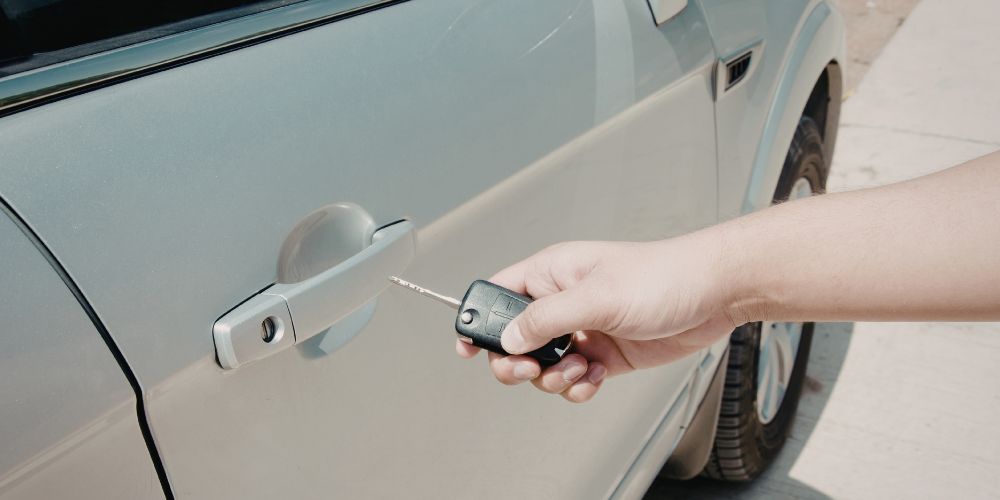
A key fob is small, but when it stops working, it can quickly disrupt your day. One minute you’re heading out the door, and the next, you’re standing frozen beside your car, clicking the unlock button over and over with zero response. Whether you’re heading to work or trying to get home, a key fob that won’t respond can leave you stuck. Without a working key fob, accessing and starting your vehicle becomes much more difficult.
Many people assume they’ll need an expensive dealership visit, but that’s not always the case. However, the truth is that key fobs rarely fail for completely mysterious, unexplainable reasons. In most cases, the problem is caused by one of a few common issues. Understanding these common causes can help you identify the problem and decide what to do next.
How Your Key Fob Communicates With Your Car
A key fob isn’t magic. It’s a small radio transmitter. Every time you press a button, it sends out a short, coded signal. Your car has a receiver that listens for that exact code. If the code matches what’s stored in the car’s memory, the doors unlock or the engine starts.
That word memory matters. Your car doesn’t just recognize any fob shaped the right way it recognizes a specific code. If that code gets erased, damaged, or never matched in the first place, the fob becomes useless to that car, even if every part inside it still works fine.
Six Everyday Reasons Behind a Dead Fob
Although a dead battery is a common cause, key fobs can stop working for several other reasons. Because they are packed with sensitive micro-electronics, it doesn’t take much to disrupt the secret conversation between the transmitter in your hand and the receiver in your dashboard. Most key fob problems are caused by physical damage, water exposure, worn parts, or programming issues.
1. Damage From Dropping the Fob
- Fobs live a rough life in pockets, heavy bags, and cup holders. They constantly get dropped, sat on, or even run over by shopping carts.
- Each impact stresses the delicate, tiny components inside the plastic shell.
- Eventually, an internal circuit cracks or shifts out of place, breaking the signal. Unlike a dead battery, this isn’t a quick five-minute swap.
2. When Your Key Fob Gets Wet
- A quick drop into a puddle, a rain-soaked coat pocket, or a spilled morning coffee can easily short out the internal circuit board.
- While some fobs miraculously bounce back after drying out, many suffer permanent damage.
- Water damage is incredibly frustrating because the exterior looks perfectly fine, hiding the corrosion happening inside.
3. When the Key Fob Needs Reprogramming
- It sounds strange, but your vehicle can completely lose its stored memory of your key fob.
- This usually triggers after a dead car battery, a recent jump start, or complex electrical repairs.
- In this scenario, your fob is completely healthy and your car has simply stopped listening for its specific signal.
4. Worn-Out Buttons
- Pushing a button thousands of times over the years eventually flattens the small conductive rubber contact hidden underneath.
- This is incredibly common on older vehicles or fobs that get heavy daily use.
- You will usually notice you have to press down harder and harder over time until, one day, it stops responding altogether.
5. Lost or Stolen Key Fob
- Sometimes the hardware isn’t broken at all, it’s just completely gone.
- Losing your keys or having them stolen is a massive inconvenience that immediately turns into a security risk.
- If someone else has your fob, they have total, unrestricted access to your vehicle until that key is wiped from the car’s memory.
Common Key Fob Problems and Their Causes
| What's Happening | Likely Cause | Next Step |
|---|---|---|
| Works only up close | Low battery | Swap the battery |
| Worked, then suddenly stopped after a fall | Internal damage from a drop | New fob needed |
| Stopped after getting wet | Water damage | Dry it out, replace if no improvement |
| Car battery died recently, fob stopped after | Lost car memory | Reprogram fob to car |
| Needs a hard, forceful press | Worn button contact | New fob needed |
| Missing entirely | Lost or stolen | New fob cut and programmed, old one shut off |
Small Habits That Add Years to Your Fob's Life
A few simple habits can stretch the life of your fob quite a bit:
- Keep it dry: Avoid rain, sweat, or spilled coffee.
- Handle with care: Try not to toss it around or let it take repeated drops.
- Preemptive battery swaps: Change the battery once a year as routine maintenance, not just when it dies.
- Have a backup: Keep a spare fob programmed and stored safely, so a single failure doesn’t leave you stranded.
Conclusion
At the end of the day, a dead key fob almost always comes down to a few usual suspects: a drained battery, physical damage from a hard drop, water exposure, worn-out buttons, or a lost connection with your car’s memory. While a quick battery swap solves the easiest cases, anything beyond that typically means you need a brand-new fob that is properly cut and programmed to match your vehicle’s specific security system. Trying to handle this on your own or relying on unprogrammed online replacements will only leave you with an expensive, non-functional paperweight.
If you’ve already ruled out the battery and find yourself stuck, skipping the dealership drama is your best next move. Avoid the long wait times, towing fees, and notoriously inflated dealer prices. Contact us at Best Locksmith today, and let our team handle the rest. Our mobile technicians will come directly to your location, cut and program a fresh key on the spot, and get a reliable, working fob back in your hand without the hassle.