

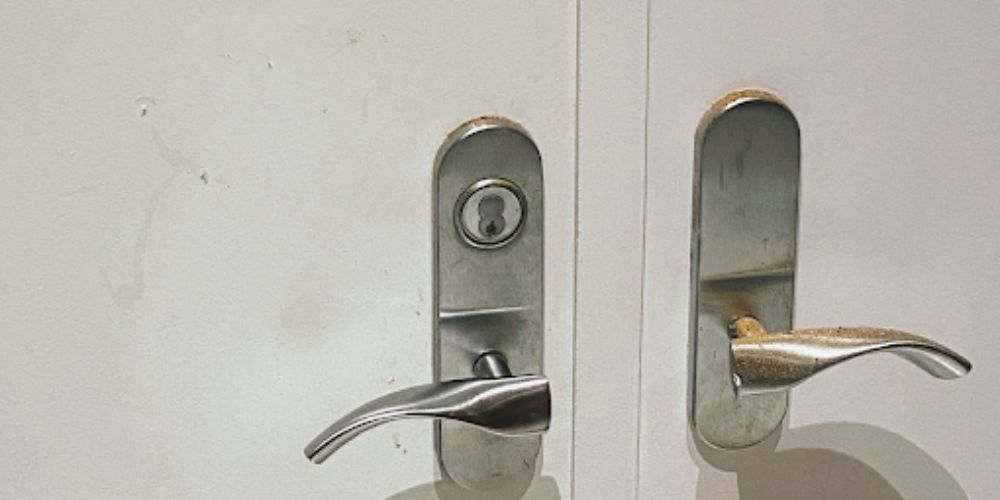
Locks are mechanical parts. Inside every lock there are small pins, springs, and metal pieces that have to move every time you turn a key. Because of that, locks react to their environment. Hot summers, cold winters, rain, and humidity all affect how smoothly a lock works.
Weather doesn’t break a lock overnight. It works on it slowly, expanding the metal, shrinking it, letting in moisture, drying things out. If your key has suddenly gotten hard to turn or your deadbolt started sticking for no clear reason, this is usually why.
Why Locks Are So Sensitive to Weather
A lock has small pins, springs, and metal parts inside that need to move freely. These parts are built with tight tolerances, meaning there isn’t much extra room for error. When the temperature shifts, the metal inside the lock expands or contracts, even if it’s just a tiny bit. That small change can be enough to throw off how smoothly the mechanism works.
Most residential locks are made of brass, steel, zinc alloy, or aluminum. Each of these metals reacts differently to heat and cold. Brass and steel hold up fairly well, but cheaper zinc alloy locks tend to warp or stick faster when temperatures swing. This is one reason choosing the right lock for your home doors matters more than people think.
What Happens to Locks in Cold Weather
Winter is rough on locks, especially in areas that get freezing temperatures overnight. Cold weather causes a few specific problems.
- The internal pins shrink slightly, so the key feels stiffer than usual.
- Rain, snow, or even morning dew can get into the keyhole and freeze solid, blocking the key from going in at all.
- Old grease or oil that worked fine in warm weather can turn thick and sticky in the cold, slowing down the pins.
- Weatherstripping shrinks a little, and that can shift the door just enough so the latch no longer lines up with the strike plate.
If you’ve ever stood outside your door on a freezing morning jiggling your key back and forth, this is usually why. Your lock didn’t break overnight. The cold just did what cold does to metal. If you’re truly stuck outside and the key won’t budge, that’s usually when people end up calling an emergency locksmith instead of waiting it out.
What Happens to Locks in Hot Weather
Summer heat causes a different kind of trouble. When metal heats up, it expands. In a lock, that means the pins and internal parts have less room to move around inside the cylinder.
Doors themselves can warp slightly in extreme heat too, especially wooden doors. When a door swells even a little, the deadbolt or latch can end up misaligned with the strike plate. You might notice you have to lift the door slightly or push hard on it to get the lock to catch. Humidity adds to this problem, since damp air makes wood swell even more than dry heat alone.
How Humidity and Rain Play a Role
Moisture is just as much of a problem for locks as temperature. Humid air carries water vapor that can get inside the lock mechanism. Over time, this leads to rust, especially on cheaper locks that aren’t rated for outdoor exposure.
Rust builds up slowly, a little at a time, until one morning your key just won’t turn. Coastal areas have it even worse because salty air speeds up corrosion. This is part of why modern locks have improved home security so much over the last few years, since newer hardware and finishes are built to handle moisture better than older, standard locks.
Signs Your Lock Is Struggling With Weather Changes
Weather isn’t the only reason a lock starts acting up. Here are some common signs that point to weather, and not a broken lock, as the cause.
| Symptom | Likely Cause | Season |
|---|---|---|
| Key is hard to insert | Ice or frozen moisture in keyhole | Winter |
| Key turns but door won't open | Metal pins contracted, misalignment | Winter |
| Deadbolt won't line up with strike plate | Door swelling from heat or humidity | Summer |
| Key feels gritty or rough | Old lubricant thickened or dried out | Winter/Summer |
| Lock is stiff after rain | Rust starting to form | Rainy seasons |
| Key snaps or bends | Weakened metal from repeated stress | Any season |
If you’re seeing more than one of these signs, weather is probably the root problem. Still, a lock that keeps acting up season after season, no matter what you try, may just be worn out. Sometimes rekeying services can solve it for less than a full replacement, but if the mechanism itself is damaged, lock replacement is usually the better fix.
Simple Ways to Protect Your Locks From Weather
You can’t control the weather. What you can do is stay on top of how to maintain your locks and keys so they’re ready for whatever the season brings. None of the steps below take much time, and most people can do them without any tools.
- Use a graphite or silicone based lubricant instead of regular oil. Oil attracts dust and dirt, which makes things worse over time, while dry lubricants hold up better in both hot and cold weather.
- Don’t pour hot water on a frozen lock. It might seem like a quick fix, but the water can refreeze inside the mechanism and make things worse. A small amount of hand sanitizer or a proper lock deicer works better.
- Check your weatherstripping once a year. Worn out seals let more moisture and cold air reach the lock itself.
- Wipe down exterior locks after storms. A quick wipe removes moisture before it has a chance to sit and cause rust.
- Get your locks checked before winter and summer hit. A quick look can catch small issues before they turn into a lock that won’t open at all.
When It's More Than Just the Weather
Sometimes the weather gets blamed for a problem that’s really mechanical wear. Locks don’t last forever. The average residential lock has a working life, and after years of daily use, the pins and springs naturally wear down. Weather tends to expose problems that were already building up underneath.
If your lock has been sticking for months regardless of season, or if you need to jiggle, lift, or force the door every single time, that’s less about temperature and more about a lock reaching the end of its life. In that case, a residential locksmith can take a look, and it’s usually faster and cheaper than replacing parts over and over yourself.
Keeping Your Locks Working, No Matter the Season
You can’t stop the weather from changing. You can stay ahead of what it does to your locks. A little regular care, the right lubricant, and knowing the early warning signs go a long way toward keeping you from getting locked out of your house or business on a cold morning or hot afternoon. Locks are small, and it’s easy to forget about them until one stops working.
If your locks have been acting up lately, it’s worth getting them looked at before the next season change. A quick inspection now from a local locksmith can save you a frustrating morning later.
Give us a call or check out our full range of locksmith services to get your locks inspected and ready for whatever the weather brings next.




