

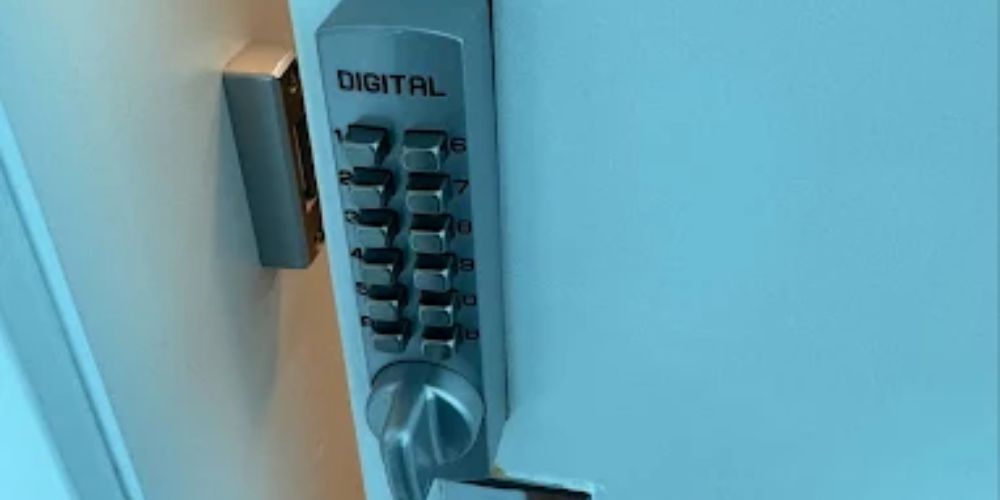
Go look at the doors in your place for a second. Bedroom, bathroom, front door, the back one you never use. Odds are they don’t all have the same lock. Some have a plain knob and one has a deadbolt. The back door might even have a keypad.
They all do one job, which is keeping a door shut. But they go about it in pretty different ways, and some are much tougher than others. The sections below cover the main types of door locks, what each one is good for, and how to pick one. Miami has its own quirks too, since the weather and the buildings here matter more than you’d think.
Door Lock Types at a Glance
The security levels here are rough, since brand and grade can change things a lot.
| Lock Type | Best For | Security Level | Key or Keyless |
|---|---|---|---|
| Deadbolt | Front and back doors | High | Key or keypad |
| Knob lock | Bedrooms, closets, interior doors | Low | Key |
| Lever handle lock | Offices, shops, accessible doors | Low to medium | Key |
| Mortise lock | Older homes, hotels, commercial buildings | High | Key |
| Smart lock | Homes, rentals, apartments | Medium to high | Keyless |
| Rim lock | Older doors, gates, sheds | Medium | Key |
| Padlock | Gates, storage, lockers | Low to high | Key or combination |
Deadbolt Locks
Most people mean a deadbolt when they say “door lock.” The bolt is a solid piece of metal. It slides into the frame and stays there. There’s no spring, so a credit card can’t push it back. That’s why it’s the go-to for outside doors.
You’ll run into three kinds. A single cylinder has a keyhole outside and a thumb turn inside. A double cylinder wants a key on both sides. A vertical deadbolt locks up and down, which helps when someone tries to pry the frame. For most homes, a single cylinder does the job.
Knob Locks and Lever Handle Locks
These are on most inside doors, and on plenty of front doors too. They’re simple to use. They’re also way easier to break than a deadbolt.
- Knob locks: You twist. They’re cheap and they’re everywhere. The lock sits right inside the knob, so a hard kick or a wrench can snap it.
- Lever handles: You push down. Easier for kids and older people. Offices and shops use them a lot for accessibility, along with other commercial door locks like panic bars.
- Privacy sets: Bathrooms and bedrooms. They lock from the inside, and there’s a small hole outside for emergencies.
- Passage sets: No lock at all. Hallways and closets.
On an outside door, add a deadbolt. A handle alone isn’t enough.
Mortise Locks
A mortise lock sits in a deep pocket cut into the edge of the door. The body is big, usually heavy steel or brass, and it holds the latch and the deadbolt together. You’ll mostly spot them in older homes, hotels and office buildings.
They’re tough and they can last for decades. The annoying part is the door. It needs a special cut, so going to a regular lock means reworking the whole thing. Parts for very old ones can be hard to track down too. If yours still works fine, it’s often better to repair than replace.
Smart Locks and Keyless Entry
A smart lock opens with a code, a phone, a fingerprint or a fob. A lot of them still have a normal key slot as backup. Renters like them. So do busy families and people with short-term guests. You give someone a code, then delete it after they leave. No spare key under the doormat.
They’re not magic, though. The keypad looks fancy, but it’s still a lock that needs power. Most run on batteries, and those last about six months to a year. We wrote about how smart locks act during power outages, and it mostly comes down to the batteries.
Other Locks You May Come Across
- Rim locks: These sit on the surface of the door, not inside it. Old doors, gates and sheds.
- Cam locks: Small and basic. Mailboxes, cabinets, lockers.
- Padlocks: They go wherever you go. Gates, sheds, storage units. Pay a little more for a hardened steel shackle.
- Multipoint locks: They hold the door at a few spots along the edge. You see them on French doors and some patio doors.
- Electronic access locks: Cards, fobs or codes. Offices and apartment buildings use them a lot, often as an access control system.
How to Choose the Right Door Lock
Start with the door. Then think about who uses it every day.
- Where it is: Front, back and garage doors need a real deadbolt. Inside doors can get by with less.
- What it’s made of: Wood, metal and glass need different hardware. A thin door may need reinforcing first.
- Who uses it: Kids and older family members often do better with a lever or a keypad.
- How many doors: With a lot of doors, a master key system lets one key open several locks.
- What if it fails: Keys get lost. Batteries die. Plan for both.
In the US, locks get a grade from ANSI/BHMA. Grade 1 is the toughest. Grade 3 is the lightest.
| Grade | Strength | Typical Use |
|---|---|---|
| Grade 1 | Highest | Busy commercial doors, high security homes |
| Grade 2 | Medium | Offices, shops and many homes |
| Grade 3 | Basic | Light home use, like interior doors |
Door Lock Needs Around Miami
Where you live changes what you need. If you’re looking for a locksmith in Miami Beach FL, you’re probably dealing with a condo, an apartment or an older house. Over in Coral Gables, plenty of houses are older, and some still have the original hardware. If you call a residential locksmith in Coral Gables about a door like that, a repair or a rekey can make more sense than swapping everything out.
Aventura and Sunny Isles Beach are packed with high rises. Those often run on key fobs, keypads and shared entry systems. So if you need a locksmith in Aventura FL, or you want to rekey locks in Sunny Isles Beach after a tenant leaves, read your building rules first. Some buildings control the lock or the keys themselves. Downtown Miami is mostly offices and apartments. If you get locked out down there, an Emergency Locksmith in Miami can usually open a standard door without damaging it. And Key Biscayne is its own story. The island air is hard on metal.
Signs You Should Change or Rekey a Lock
You don’t need to change locks on a schedule. But some things are a clear sign.
- The key sticks or is hard to turn
- The knob or handle feels loose
- You lost a key, or someone has one who shouldn’t
- You just moved into a new place
- You see rust, cracks or other damage
- Someone tried to break in
For a lost key or a new place, rekeying is usually the first thing to look at. It often costs less than a new lock. It changes the pins inside, so the old keys stop working. On a standard lock it takes about 10 to 15 minutes.
Do a Quick Door Check This Week
Every door has a different job, so every door can need a different lock. Deadbolt up front. A lever handle in a busy office. A smart lock for the one person who’s always losing keys. Most places end up with a mix.
So this week, take five minutes and look at each door. Check the grade, the shape it’s in and who has a key. If something looks worn, or you can’t tell what you’ve got, have a licensed locksmith take a look.


