

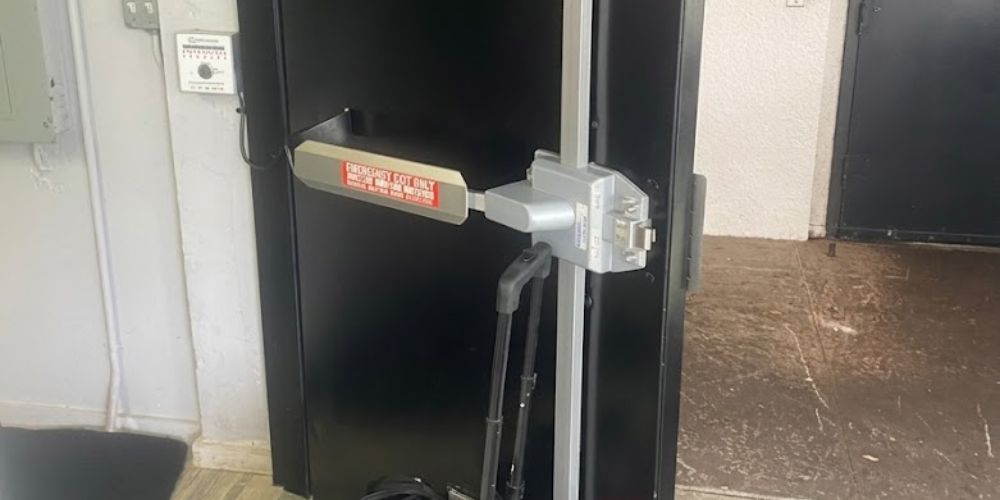
Panic bars don’t usually cause too many issues until something goes wrong! But they play a big role in making sure doors are safe in commercial buildings in Miami Beach.
We’ll take a look at how they work, how they differ from regular locks, common types, code requirements and what to look out for.
What is a Panic Bar?
A panic bar is a metal bar fitted to the interior side of an exit door. All you have to do is push on the bar to retract the latch and open the door. There is no key or knob required.
On the exterior side of the door the door will most likely be locked from the street. Some panic bars will have a key lever however some won’t have any handles at all. A keycard may also be required to gain access via the access control system. This means the door can be kept locked at night however still easily opened from the interior.
Why Panic Bars are Important in Miami Beach
Miami Beach is a busy area! There are lots of hotels, clubs, restaurants and shops along Ocean Drive, Collins Avenue and Lincoln Road meaning there will be lots of people in the building at any one time. Many of these are tourists unfamiliar with the building. Many buildings in South Beach are also old meaning it can be a bit more tricky.
When there is a large amount of people needing to exit quickly they will push on the door. This can cause issues with a twist knob or deadbolt. However a panic bar will evenly distribute force across the entire bar meaning the door can still be opened. Panic bars on exit doors in Miami Beach are a basic part of commercial door hardware.
Panic Bars vs Regular Locks
A regular lock is completely different to a panic bar. A knob or deadbolt is designed to stop people getting in. They will generally require a turn of the knob or a key to open from the interior. A panic bar is designed to let people out with the push of the bar.
This means many exit doors cannot have a regular lock. Most areas have codes stating you cannot have a lock that requires a key, tool or specialist knowledge to open from the interior. A comparison table is shown below.
| Features | Panic Bar | Knob/Deadbolt |
|---|---|---|
| Opens from interior | One push | Turn knob or insert key |
| Fast to open | Fast | Slower |
| Handles large amounts of people | Yes (wide bar) | Can cause jamming |
| Suitable for exit doors | Yes | Often not allowed on busy exits |
| Best suited for | Exit doors, back doors, stairwells | Offices, storage rooms |
Benefits of a Working Panic Bar
A working panic bar will:
- Allow people to exit the building quickly by just pushing the door open.
- No keys required. Even if the user has never used the door before.
- Large bar can cope with people pushing against it.
- Door can be locked from the exterior.
- Some models will have an alarm that sounds when the door opens preventing people sneaking out the back.
- Fire rated versions will keep the fire door latched until pushed.
- Helps with fire code compliance. See below.
- Suitable for people who struggle gripping handles. Just push!
Common Types of Panic Bars
There is no one size fits all when it comes to panic bars. Choosing the right type depends on the door, width and how many people will be using it. Common types include:
| Type | How It Works | Best For |
|---|---|---|
| Rim exit device | Latch attached to the edge of the door | Single doors, back doors |
| Surface vertical rod | Rods run along the surface of the door to the top and bottom | Double doors |
| Concealed vertical rod | Rods are hidden within the door | Neater, busy doors |
| Mortise exit device | Lock body fitted into the edge of the door | Heavy usage |
| Fire exit hardware | Tested and labelled for use on fire doors | Stairwells, fire doors |
| Alarmed exit device | Sounds a siren when the door opens | Doors that need monitoring |
If you’re unsure what type of panic bar is best for you, a commercial locksmith in Miami Beach can come and have a look at the door for you. This is a great idea to do before purchasing any hardware. A common mistake is to purchase the wrong type of bar for the door which can be frustrating.
Where Panic Bars are Required in Miami Beach
Some buildings will require panic bars whilst others will just benefit from having them. Common areas include:
- Restaurants & Bars
- Nightclubs & Event Spaces
- Hotels & Condo Buildings
- Retail Shops & Shopping Centres
- Schools & Daycare centres
- Medical Offices & Clinics
- Gyms & Fitness Studios
- Warehouses & Storage Buildings
- Busy Offices
Usually the amount of people the space can hold will determine if it requires one. A small shop may not require one however a busy club on Washington Avenue will likely require one.
Choosing the Right Panic Bar
Once you know what questions to ask it’s an easy process. Ask:
- What type of door? Single or double? Wood, metal or glass?
- How many people will be using it on a busy day?
- Is it a fire rated door?
- Do you want the panic bar to have an alarm?
- What do you want the exterior to look like? Key lever, blank plate or card reader?
- Is the door near to the water? Salt air can be an issue.
- Does it match the rest of your hardware?
Once you’ve answered these questions it will be much easier to choose. Some owners will also look at smart locks for the exterior of the door. Many exit devices can be used with electronic trim. Ask about this before you get it fitted.
Codes & Regulations
Codes will determine which doors require panic hardware. In Miami Beach this will be based around the Florida Building Code and Florida Fire Prevention Code. Areas where a large amount of people gather such as restaurants, clubs and schools will usually require panic hardware on exit doors once the room reaches a certain amount of people. This will depend on the type of area. Fire doors will require hardware that has been tested and labelled for use on fire doors. These are often referred to as fire exit hardware.
Regulations can vary between buildings so it’s best to check. Contact the building or fire office in the city and ask what is required for your space. A good locksmith can help you work through this however the city will have the final say.
Important! Never chain or padlock an exit door even for a short period of time. This is one of the most common fire code violations and can cause people to be trapped.
Preparing Exit Doors for Hurricane Season
Hurricane season is a good time to check your exit doors. Before a storm occurs make sure all bars can be pushed easily and the latch engages with the strike plate. Remove any stock that has been piled up. If the door is sticking on a regular day it will stick even more when the frame has swollen or moved.
After the storm has passed, check them again. Check for any water in the hardware, new rust, warped parts or the door not closing properly. Small movements in the frame can cause the exit door to stick. This is an easy check to do.
When to Look Out for Issues
Check for:
- Stiff or difficult to push
- Door not closing fully
- Latch sticking
- Rust on panic bar or strike plate
- Loose or rattling
- Alarm sounding
- Shoulder bump required to open
- Grime build up on moving parts
If 2-3 of these sound familiar to you then get it checked out soon. If the door is jammed shut then this is a different scenario. An exit door shouldn’t be blocked and this is usually when an emergency locksmith will come in.
Common Mistakes Business Owners Make
Most issues with panic bars can be easily avoided. Common mistakes include:
- Incorrect panic bar chosen
- Regular panic bar used on fire rated door
- Stock, chairs or bins piled up
- Panic bar installed outside of code height
- Not maintaining until it starts to seize
- Small damage ignored i.e. bent panic bar or cracked cover
- Not using someone who knows about commercial hardware
Installing & Maintaining
Before installing a panic bar you need to ensure the door is solid, straight and properly hung. If the frame is warped then even a good panic bar will cause issues. The installer will check the door first, choose the right device and install it at the correct height. This will avoid many issues.
Maintenance is easy. Push all bars once a month. Let go and watch the latch. Wipe down any grime or salt. Tighten any loose screws. Note the date. This takes just a few minutes. Any larger jobs such as panic bar installation in Miami Beach or replacing a worn exit device should be done by a professional. A yearly check is a good habit.
Final Thoughts for Business Owners in Miami Beach
Exit doors don’t need to be complicated. They just need to work every time. A panic bar may seem like a small component however it plays a big role in getting an entire building out.
If you own or manage a space it’s a good idea to give each exit bar a push occasionally. Check for any signs of rust, looseness or boxes piled up. If anything feels off then get it sorted.
Want to Check Your Exit Doors?
Not sure if your exit doors are up to the job? We can check your panic bars, replace worn parts or fit new exit devices for your business in Miami Beach. Give us a call or message and we can find a time that suits you.


